Journal · Philosophy & Therapy
What is philosophical counseling?

What slips through your hands

One evening you stop and look back, and a strange feeling creeps in: among all the errands you ran and all the days you somehow got through, could the thing slipping through your hands be your own life?
This feeling is exactly where the German philosopher Gerd B. Achenbach, widely regarded as the modern founder of philosophical counseling, begins. Within the monotony of daily life, people are dragged this way and that; then one day they realize, with astonishment, that what they have been chasing all along is their own life. Achenbach conveys the harshness of this awakening with a line from Schopenhauer: the ordinary course of a human life is to be deceived by hope and to throw oneself into the arms of death. Whoever faces that possibility begins to hear the call of philosophical thought — for philosophy grants weight and meaning to life and to human existence.
Indeed, Achenbach believes that those who attend the Friday-evening philosophy talks at the institute of philosophical practice in Germany are, at bottom, after one thing: a reckoning with their own lives. And that reckoning leads first not to "how should I live?" but to a plainer question: What am I doing?
Humans have not changed — nor have the questions
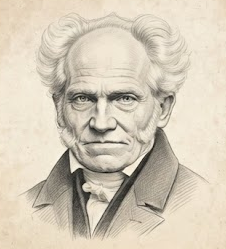
The texts of these questions reach back two and a half thousand years — and every time we open them, we find them speaking to the people of today. However much the age, our relationships and our living conditions may change, in their existential make-up the human being of that day and the human being of this day do not differ. The Athenian who lost a loved one and today's person who loses a loved one stand at the same threshold. Philosophical counseling leans on this common ground: the problem may look new, yet a thought-through version of it usually already exists.
Socrates' practice
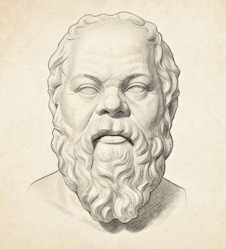
Achenbach traces the root of this questioning to Socrates and underlines a crucial detail: what Socrates did was not lectern work but a practice. For him, philosophy was not a set of problems pondered in solitude; it was an activity carried on with others, through the different aspects of a matter, sometimes by refutation, sometimes by agreement. When the dialogue closed, the problem under discussion had become clear to its participants. This is the method used today, under the name Socratic Dialogue, both in philosophical counseling and in existential therapy. And what we go through in our work, school, couple and family relationships are, at bottom, the everyday guises of the very concepts Socrates worked through in his dialogues — virtue, friendship, courage, wisdom, duty.
"The unexamined life is not worth living."
— Socrates
The moments that knock on the door
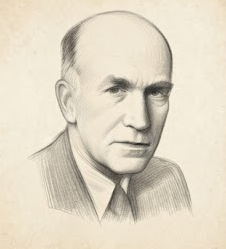
So when does a person need this questioning? At the thresholds Jaspers called boundary situations: incurable illnesses, bruising life experiences, disappointments, unresolved conflicts in relationships, the confrontation with death, failures. These are not malfunctions; they are thresholds that run through being human. For Achenbach, the need for counseling is born when the worldview and way of life that sustain a person begin to be questioned by that person themselves; and what the counselee expects is clear: to reckon with what they have lived through and to make sense of it. Daily busyness does not allow this — one cannot attend to oneself, one's decisions, one's actions; the search sprouts precisely from that gap.
The question behind the symptom

According to Rollo May, a pioneer of existential psychology, focusing on symptoms alone makes us overlook the side of a person that most deserves attention. At the root of neurotic symptoms there often lies a guilt born of fleeing one's own freedom and leaving one's possibilities unused; when a person grasps themselves as free and notices the richness of their possibilities, anxiety returns to normal proportions. Yet even this, May says, is a secondary gain — what matters is that the person experiences their own existence and becomes free.
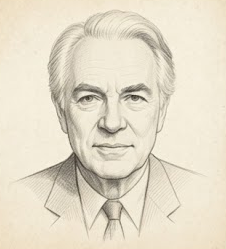
The diagnosis he shares with Frankl describes our present: the modern person, insulated from beliefs and values, finds themselves in an existential vacuum — and psychotherapy cannot close that vacuum without philosophy. Lou Marinoff's proposal comes from the same vein: to chart our course, we should draw not on a single school but on the sum of the practical applications of the schools of philosophy.
What it is not — and what it does
Philosophical counseling does not diagnose, does not prescribe medication, does not hand out ready-made recipes; it is not psychotherapy's rival but its neighbor. What it does can be summed up along Marinoff's lines: helping the counselee understand what kind of problem they are facing, working the problem through in dialogue, accompanying them in questions of value and meaning, lending a shoulder to the effort of building a virtuous and effective life. And reminding us of one thing: philosophy is not only a pursuit to be studied but a subject to be practiced.
Its measure
The compass of this thinking-together is the virtue this site is named after: phronesis, practical wisdom — the craft of seeing what to do, when, how much and how. If you wonder how it works in practice, the philosophical practice page shows the way.
An invitation
What question are you living with these days? Even writing it down is a beginning — the examined life starts with a single question.

Sources: Achenbach, G. B. (2010; 2021) · Marinoff, L. (2015) · Feist, J., & Feist, G. J. (2009). Theories of Personality · Plato, Apology. — Adapted from the fifth chapter of the author's doctoral dissertation in philosophy (Maltepe University, 2022).
← Journal