Journal · Existence & Meaning
What is existential psychology?
Pushing back against the objectified human
The everyday language of the clinic speaks in symptoms: sleeplessness, anxiety, apathy, exhaustion. Existential psychology enters the same room with a different question: What kind of life is this symptom speaking from?
The great schools of twentieth-century psychology explained a great deal. Psychoanalysis, behaviorism and the biological approach developed powerful tools for understanding the human being. Yet they often did so at a price: they abstracted the person from the web of connections they live in and treated them as an object. The narrowness of this picture turned theorists back toward philosophy. One of the first great objections came from Karl Jaspers, psychiatrist and philosopher in one. In his General Psychopathology (1913), Jaspers argued that a psychiatry dominated by the biological gaze had grown too narrow, and proposed the phenomenological method for studying the psyche. The essence of this method is simple: before reaching for ready-made diagnoses, look at lived experience itself.
The root that comes from philosophy
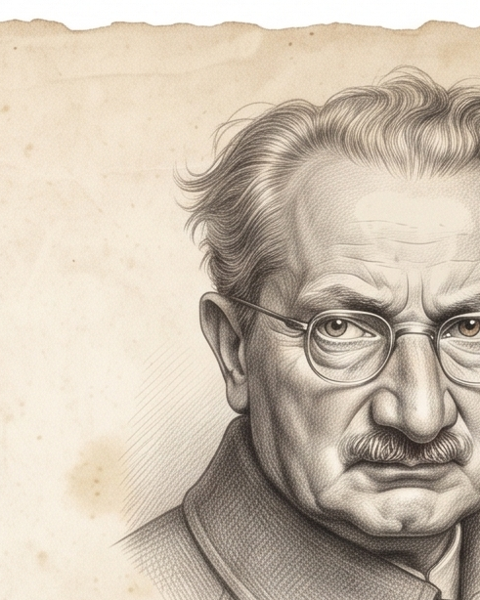
Behind this pushback stands a deep-rooted body of philosophy. The line that runs from Kierkegaard, existentialism's emblematic philosopher, to Heidegger and Sartre; and alongside it, phenomenology, ontology and philosophical anthropology. That these currents rose in the twentieth century at the same time as existential psychology and influenced one another directly is no coincidence. They all pursue the same question: What is the human being, and how should one approach them?
So what exactly is it?
Abraham Maslow defines existential psychology by two features. The first is that it puts the experience of identity and the search for identity at its focus. The second is that it values lived experience over abstract concepts. And here lies the approach's point of departure: the human being is studied without being squeezed into the subject-object mould — as a concrete, acting being, within the whole of their connections and relations to the world.
"Existentialism can supply the philosophy that psychology has been lacking."
— Abraham Maslow
Not technique — encounter
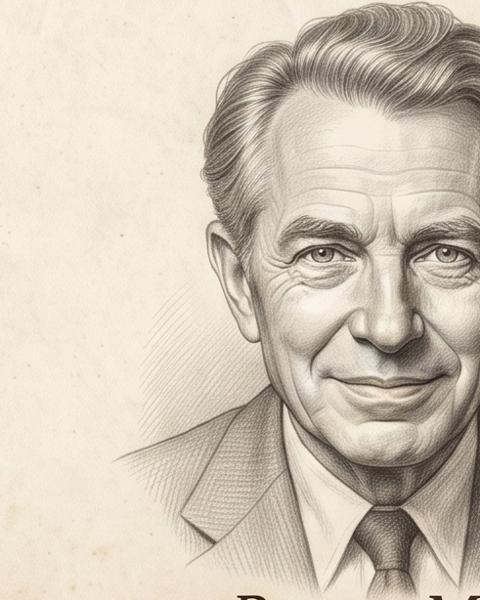
A shared attitude unites May, Frankl and Yalom: all three criticize clinging tightly to techniques and method templates. In their view, this attachment disrupts the natural flow of healing and causes elements of human existence to be skipped over. Therapy is not a formulaic procedure but an encounter. In this encounter, the counselee is motivated to examine and question their stance toward life, and is encouraged along the way of facing life events and coming to accept them. The method of existential therapy is Socratic dialogue; its principle is being here and now. We saw the aim May set for therapy in the previous essay: the real aim is for the person to experience their own existence and become free; the disappearance of symptoms is, beside that, a secondary gain.
The condition of self-knowledge: others
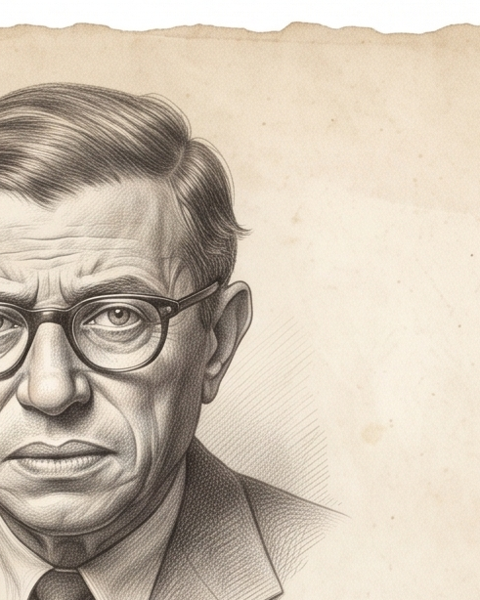
One of existential thought's least known yet most transformative claims is this: a person cannot know themselves alone. In Kierkegaard, in Jaspers, in Heidegger and Sartre, the condition of self-knowledge is experiencing the existence of others. And others are experienced only within relationship. The philosophical counselor Marinoff meets them at the same point: we see our own reflection in others; that is why relationships make self-understanding easier. This is why therapy and counseling are each a dialogue. Without someone across from us, our knowledge of ourselves remains incomplete.
The will to meaning
Frankl adds his own contribution to this heritage: the human being's fundamental drive is neither pleasure nor power but the will to meaning. This is the core of logotherapy. For Frankl, a person's failure to bring their life together with meaning is the source of the pathological states that develop; adjustment problems tied to the lack of meaning are born not of an illness but of being human. A person may fail to realize their need for meaning, may be entirely unaware of the search for it, or may feel powerless to undertake it — all three are different faces of the same vacuum. The existential vacuum into which the modern person, insulated from their values, has fallen was our subject in the previous essay. Existential psychology is precisely the psychology of that vacuum.
Where they meet — and where they part
Existential psychology and philosophical counseling meet at many points: both are philosophical practices, both use Socratic dialogue, both are committed to the here and now. In both, the healing effect comes about indirectly: in the "equilibrium" stage of Marinoff's PEACE method, the real target is the person's coming to know themselves; the solution of the problem arrives as a consequence of that. The difference lies here: existential psychology is a psychotherapy — it stands inside the clinic and works with the concept of illness. Philosophical counseling, by contrast, is not therapy; it does not diagnose. Raabe captures the difference in a fine role: the philosophical counselor is both counselor and teacher. They are concerned with preventing problems as much as with reducing them; they give the counselee tools not only for today's problem but for thinking on their own in the future. The aim is not to make the counselee dependent, but to make them independent.
For today
In a 2004 interview with Der Spiegel, Achenbach put it this way: most of the problems people have with themselves or with others are problems of the way they live — and philosophy is responsible for that. This is why existential psychology and philosophical counseling are neighbors. Both look at the life behind the symptom; both see the human being as an acting whole within their connections. And the virtue that guides them both is the same: phronesis, practical wisdom — the craft of seeing what to do, when, how much and how.
A call
If symptoms have a language, what might yours be saying? The question is heavy. But this is what existential psychology teaches: you do not have to stay alone with it.

Sources: Maslow, A. H. (2021) · Jaspers, K. (1913). Allgemeine Psychopathologie · Marinoff, L. (2015) · Raabe, P. B. (2021) · Moja-Strasser, L. (2017) · Arnold-Baker, C. (2017) · Köroğlu, E. (2019) · Achenbach, G. B. (2004, Der Spiegel interview). — Adapted from the fifth chapter of the author's doctoral dissertation in philosophy (Maltepe University, 2022).
← Journal